LiveLink Aerospace Demonstrates Dual-Use Air-Surveillance Technology at Aberdeen Offshore Wind Farm
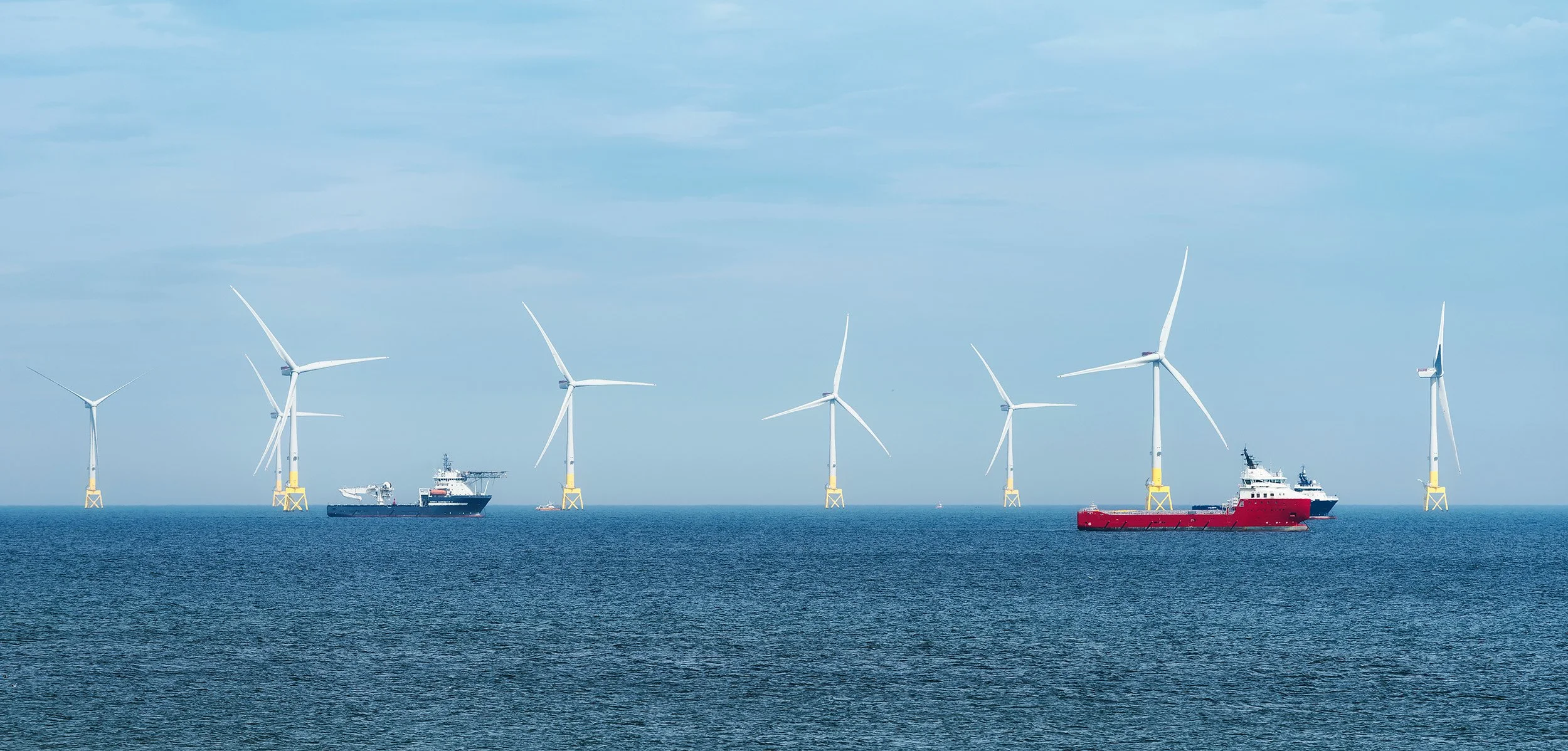
LiveLink Aerospace has successfully demonstrated its next-generation passive sensing technology at Vattenfall’s Aberdeen Offshore Wind Farm, marking a significant milestone in showing how the company’s Air Intelligence System (AIS) can help strengthen national air-surveillance resilience while supporting the UK’s offshore renewable-energy ambitions. The programme was funded by the Department for Energy Security and Net Zero (DESNZ) and overseen by the Defence and Security Accelerator (DASA / UKDI), reflecting a strong commitment to advancing technologies that benefit both the energy and defence sectors.
By placing lightweight, low-power multi-sensor packages directly on turbine nacelles, each asset becomes a valuable, intelligent node that contributes to safer and more efficient operations. This supports predictive maintenance workflows, enhances situational awareness during O&M activities, and enables future use cases such as drone inspections.
To validate this capability in real-world conditions, the Air Intelligence System — a fully passive platform designed to enhance air-surveillance awareness without emitting any signals — was deployed across multiple nacelles and evaluated in the demanding, clutter-rich environment of an operational offshore wind farm, demonstrating the system's robustness in live offshore operations.
The demonstration further showcased the role of innovative UK-developed technology in helping operators navigate longstanding challenges associated with integrating offshore wind development with national air-surveillance requirements. AIS-enabled sensing has the potential to reduce project risk, streamline stakeholder consent processes, and lower CAPEX and OPEX over the lifetime of a wind farm by reducing reliance on more costly conventional approaches.
Key outcomes of the demonstration
Enhanced local air picture: The AIS demonstrated the ability to enhance the local air picture, contributing to clearer situational awareness without requiring changes to existing surveillance systems.
High-fidelity situational awareness: The platform generated real-time tracking and detection outputs, improving visibility of low-altitude airspace activity.
Operational added value for wind farms: The multi-sensor nacelle packages showed potential benefits for O&M planning, safety awareness, and drone-based inspection workflows.
Proven offshore robustness: The system performed reliably in harsh marine conditions, reinforcing its suitability for a range of operational wind-farm environments.
A collaborative step forward
The trial was conducted in partnership with Vattenfall and ORE Catapult, providing a rare opportunity to evaluate the AIS in a live offshore operational setting—an essential step in validating the technology at scale. This collaboration demonstrates how industry, innovation partners, government organisations, and operators can jointly develop solutions that accelerate clean-energy growth while supporting national security objectives.
Next steps
Following the success of the Aberdeen demonstration, LiveLink Aerospace will continue to advance and optimise the Air Intelligence System to support broader deployment opportunities. The company's goal is to ensure that renewable-energy development, operational efficiency, and air-surveillance capability progress in tandem, contributing to a cleaner, safer, and more secure national infrastructure.